Posts

Showing posts with the label neuroscience

Objections and Refutations: FAQs about the Free Will Illusion

Image
Credit: Needpix Hello folks, I've received lots of comments about my previous notes on the illusory nature of free will, some in the form of comments on the facebook note itself and others in private messages. I apologize for being late in the response but I had to pause for the community medicine exam. To make things simple, I'll answer the questions in a Q&A style ... استعنا على الشقا بالله :) Q1. Why do I have the ability to make simple choices that don't have important consequences? After All, I could have been watching football rather than reading or debating philosophy!! There are multiple problems with the previous question. First of all, it contains a circular argument, which assumes the existence of choice in proving that there is a choice. Or rather, it equates the PERCEPT of free will (what I consider to be an illusion) with the actuality of free will. The second problem with the previous argument is that it equates lack of predictability wit...

The Illusion of Free Will

Image
Credit: Mohamed Hassan . Have you ever thought that you might not be actually making any choices? Ever questioned the freedom of your will? Ever thought while you moved your hand to grab a glass of water that this was predetermined, given the fact that your body has lost water and gives you the illusory feeling of being free while extending your hand to drink? But before we talk about free will, it is necessary to think of the very definitions of the words "free" and "choice" in order to know what we're talking about. The word "free" implies the absence of pressures, the total "autonomy". OK what about the word "choice"? Choice means the ability to pick between various options, right? So if I could buy a red car or a blue car, I would say that I made a choice of color. Alright, so how do our definitions relate to the argument against free choice? Well, I think it is quite simple: try to combine the two definitions toget...

Prisoners of our own receptors

Image
"Cogito ergo sum." I think, therefore I am. This is how the French philosopher Rene Decartes, long ago, put the starting clue for a long branch of philosophy called epistemology, which tries to understand how is it that we know what we know and how do we justify what we assert. We all have this percept of being "in charge"; of knowing what we are, what the world around us is made of and what happened yesterday or is expected to happen tomorrow. But, is this even remotely true? Prisoners of our vision Credit: Pxfuel . Anyone who has taken high school –or even middle school- physics will know that light is but a thin strip of the electromagnetic spectrum. X-ray, radio waves, microwaves and gamma rays are all but because it's what we can perceive, but it really holds no special qualities. If the survival of mammals was optimized by X-rays, then that would be what we perceive, and it would be virtually impossible for us to understand what it...

Consciousness: a primer

Image
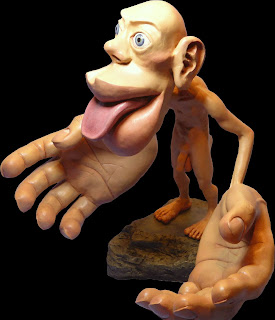
A couple of years ago, particularly during the holiday between  the first and second year in college, I decided to watch a neuroscience course called Understanding the Brain  for the neuroscientist Jeanette Norden. It's a great course, especially to those who would like to get a philosophical and thought-provoking introduction to the field before getting loaded with the details of neuroanatomy and physiology. Credit: Wikimedia Commons . I was quite surprised at the fact that I never quite thought about such primitive questions as "how do I see things?" and even where the "seat of thinking" lied. Now, after two years of reading and listening of lectures and videos on the subject, I know why. It all stems from our tendency to introspect.We assume that there's a little man (or homunculus , if you prefer the proper term) inside our heads that represents the real "us" who actually analyses the data,  external to the actual hardware ...